


Five horror advertising campaigns reveal how brands leveraged immersive storytelling across multiple channels to achieve exceptional results and industry acclaim.
Creative teams often instinctively pull back from horror as a storytelling device. Brand guidelines, safety concerns, and the fear of alienating audiences typically push campaigns toward safer, more conventional territories.
Research by R. Weiss on “Dopamine, learning and motivation” reveals the science behind horror’s effectiveness: scary content triggers dopamine spikes that make audiences neurochemically primed for behavior change. This biological response transforms fear from a barrier into an opportunity—one that forward-thinking brands are leveraging across categories from healthcare to fast food, pest control to food delivery.
Between 2022 and 2025, brave brands have proven that horror—when executed strategically—can be one of advertising’s most effective tools. These campaigns aren’t about shock value or seasonal gimmicks. They’re sophisticated creative strategies backed by neuroscience and validated by exceptional commercial results. This Halloween, we’ve curated standout horror advertising campaigns from Cannes Lions The Work — all award-winners, many brought to life on the big screen — each showing how fear, when crafted with purpose, can hold an audience still.
Uber Eats’ “Don’t Run Out” (2023)
Cannes Lions: Bronze
Uber Eats tapped into the American cultural obsession with horror films by creating an authentic branded horror experience directed by Dan Trachtenberg (10 Cloverfield Lane, Prey) and starring Keke Palmer. Rather than interrupting horror content with advertising, the campaign became the horror content itself—a fully-realized short film that respected genre conventions while embedding $1 million in hidden discount codes throughout the narrative. The theatrical approach transformed a transactional Halloween promotion into a cultural event, demonstrating how horror’s immersive storytelling can elevate brand entertainment beyond traditional advertising formats. The campaign earned industry recognition for proving that audiences will actively engage with branded content when it delivers genuine entertainment value.
Read more about the campaign at: https://www.lovethework.com/
Queensland Health’s “Sunshine” (2024)
Agency: CHEP NETWORK, Brisbane
Cannes Lions: Bronze
Queensland Health disguised a sun safety PSA as a horror movie launch, using cinema’s visual language to make sun damage visceral and terrifying. The campaign deployed classic horror techniques—jump scares, suspenseful music, and graphic imagery—to transform an ignored health message into compelling viewing. By treating skin cancer as a horror antagonist rather than a statistic, the creative achieved the emotional resonance that traditional health warnings consistently fail to generate with young audiences.
Read more about the campaign at: https://www.lovethework.com/
Burger King Spain’s “Ghost Campaign” (2024)
Agency: DAVID, Madrid
Cannes Lions: 2x Bronze

With zero production budget, Burger King turned advertising’s absence into its presence. The campaign invited users to photograph empty billboards and bus shelters as if Burger King ads were haunting the spaces—playing with invisibility, participation, and the ghost concept itself. The meta-creative approach demonstrated that horror’s psychological territories extend beyond explicit scares into conceptual unease, proving creative ingenuity can outperform production budgets when the idea itself carries cultural resonance.
Read more about the campaign at: https://www.lovethework.com/
Rentokil’s “The Horroroach” (2024)
Agency: Dentsu Creative, Jakarta
Spikes Asia: Bronze
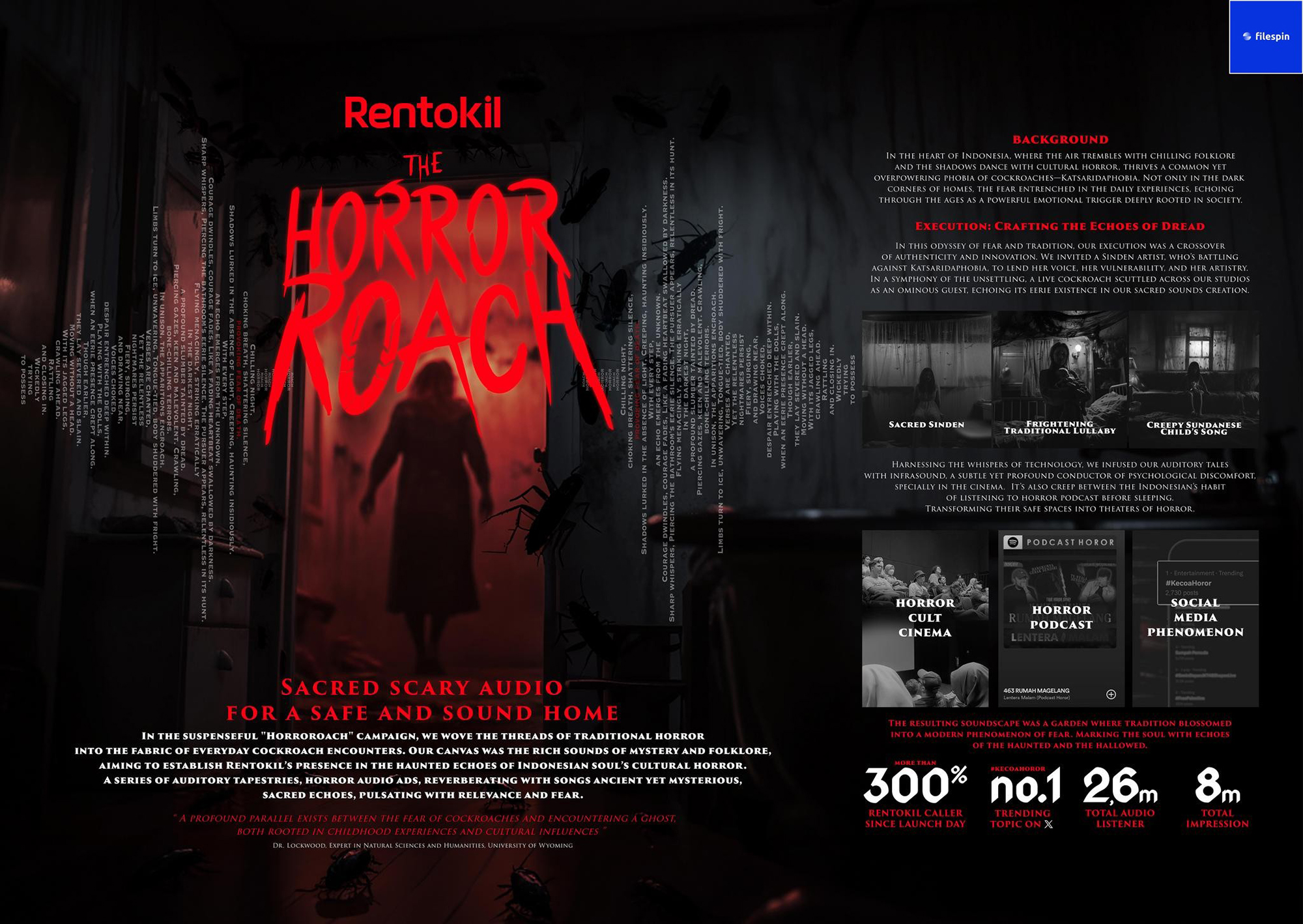
Rentokil fused Indonesian horror folklore with universal pest fears, creating audio experiences that transformed homes into horror environments. The campaign blended traditional lullabies with unsettling cockroach sounds, tapping into deep cultural beliefs about the supernatural while making pest presence feel like a horror film invasion. By respecting local folklore traditions and horror conventions, the creative demonstrated how fear-based storytelling becomes more powerful when rooted in cultural specificity rather than universal jump scares.
Read more about the campaign at: https://www.lovethework.com/
Uber Eats’ “Horror Codes” (2024)
Agency: RETHINK, New York
Cannes Lions: Bronze
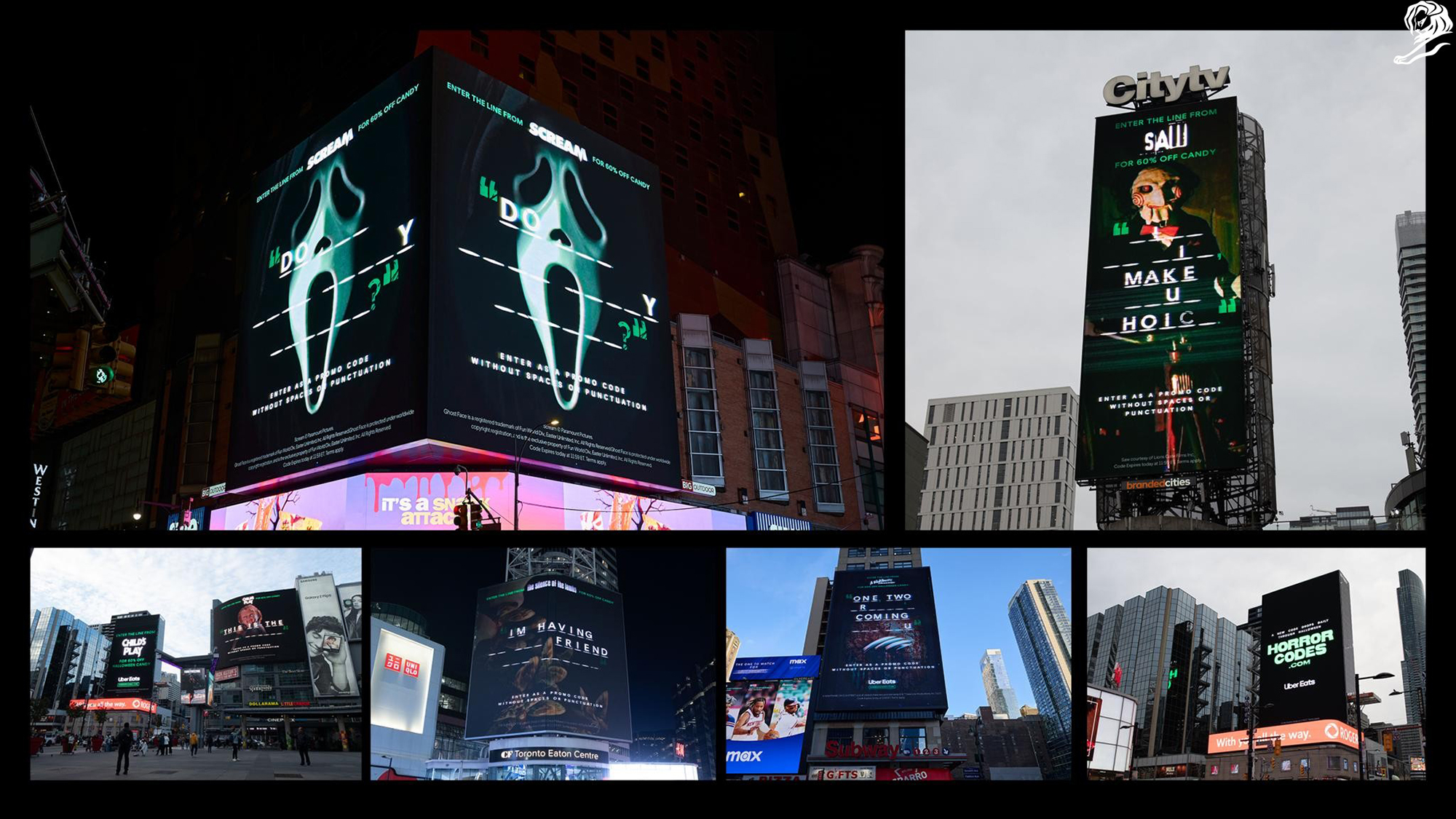
Rounding out our selection for this year’s horror advertising campaigns, Uber Eats partnered with Hollywood studios to transform iconic horror movie quotes into interactive promo codes. The campaign turned passive movie-watching into active brand participation, making audiences decode fear itself for rewards. By treating horror cinema as a shared language between brand and audience, the creative proved that nostalgia for classic horror films creates immediate cultural connection—turning movie moments into shoppable memories.
Read more about the campaign at: https://www.lovethework.com/
Looking Ahead
The evolution from seasonal gimmick to year-round strategy signals horror’s maturation as a creative device. As neuroscience continues to validate what creatives have long suspected—that fear creates memorable experiences—we expect to see more brands exploring this territory.
These award-winning campaigns demonstrate that horror, when treated as a sophisticated creative tool rather than a cheap trick, delivers exceptional results. From interactive social experiences to immersive theatrical releases, the brands earning Lions are those brave enough to embrace the “dark” side of creativity.
For brands ready to move beyond conventional safety, these campaigns offer inspiration and validation that fear, strategically applied, sells.
Related Articles:
Holsten Launches Georgina Rodríguez Cinema Campaign Across KSA
Jeep Unveils the Most ‘Dino-Packed’ Cinema Ad Ever